Is Chiropractic Safe for Seniors?
Yes, chiropractic care can be appropriate for many seniors when treatment is based on a careful health history, physical examination, and the individual patient’s needs. Age alone does not determine whether someone can receive chiropractic care. Bone density, arthritis, medications, previous surgeries, balance problems, cardiovascular health, and other medical conditions all need to be considered. For some older adults, treatment may include gentle mobilization or low-force techniques instead of a traditional spinal adjustment.
One of the questions we hear from older patients and their families at Restore Wellness Center in Melbourne, Florida is, “Am I too old to see a chiropractor?”
It is an understandable concern. A 70-year-old with osteoporosis, a 67-year-old who plays pickleball three times a week, and an 82-year-old recovering from a hip replacement may all be called “seniors,” but their bodies and health histories are very different.
That is why the better question is not whether chiropractic is safe for seniors as a group. The better question is whether a particular type of chiropractic treatment is appropriate for you.
There Is No Single Chiropractic Treatment for Seniors
Many people picture chiropractic care as one thing: a strong adjustment followed by a loud popping sound.
That is an incomplete picture.
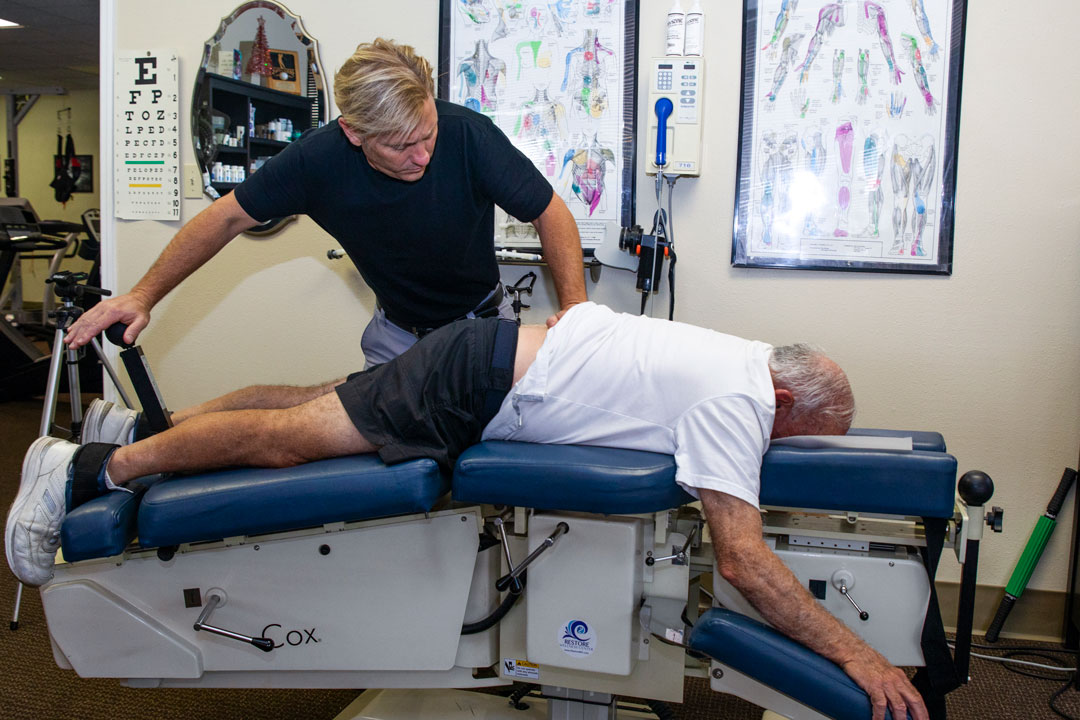
Chiropractic care can include several approaches. Depending on the patient, treatment may involve spinal manipulation, gentle joint mobilization, instrument-assisted techniques, soft-tissue work, stretching, movement recommendations, therapeutic exercises, or other conservative therapies.
The amount of force used can also vary considerably.
This becomes especially important as we age. A technique that is reasonable for a healthy 40-year-old may not be the technique we choose for an 80-year-old with reduced bone density.
At Restore Wellness Center, the decision begins with the person sitting in front of us, not with a predetermined treatment.
Why Seniors Seek Chiropractic Care
Getting older does not automatically mean living with constant pain. However, age does bring changes to the muscles, joints, discs, bones, and connective tissues.
Older adults often seek conservative care for problems such as:
- Low back pain
- Neck pain and stiffness
- Joint stiffness
- Reduced mobility
- Muscle tension
- Hip or pelvic discomfort
- Difficulty moving comfortably after sitting
- Age-related degenerative changes
- Discomfort associated with an old injury
- Problems that interfere with walking, exercise, golf, gardening, or other activities
For many seniors we see around Melbourne and Brevard County, the real goal is not simply “getting adjusted.”
They want to keep moving.
They want to walk through the grocery store without their back tightening up. They want to play golf, travel, work in the yard, get down on the floor with grandchildren, enjoy the beach, or continue living independently.
Those functional goals matter when deciding what treatment makes sense.
What Does Research Say About Spinal Manipulation in Older Adults?
Research on spinal manipulation suggests it may provide modest improvements in pain and function for some people with low back pain. Research specifically involving older adults is more limited, but older age by itself does not appear to rule out spinal manipulation.
A 2022 individual participant data meta-analysis examined adults with chronic low back pain and included 261 participants between 65 and 91 years old. Researchers found that spinal manipulative therapy produced outcomes similar to other treatments recommended in low back pain guidelines for pain and functional status.
A newer 2026 systematic review examined adverse events reported among adults older than 55 receiving chiropractic treatment. Most reported treatment-related adverse events were mild to moderate, such as temporary soreness, stiffness, fatigue, headache, dizziness, or changes in pain. Severe adverse events were reported, which is one reason proper screening remains important.
The takeaway should not be that chiropractic is automatically safe for every older adult. It is that age needs to be considered alongside the patient’s overall health, diagnosis, risk factors, and the technique being considered.
Why the Initial Evaluation Matters More as You Age
A chiropractic visit for a senior should begin before any treatment takes place.
A thorough evaluation gives the doctor information needed to determine whether chiropractic care is appropriate and what type of care may be safest.
Medical History
We want to know about more than the location of your pain.
Important information may include:
- Previous fractures
- Osteoporosis or osteopenia
- Joint replacements
- Spinal surgery
- Arthritis
- Cancer history
- Neurologic conditions
- Recent falls
- Balance problems
- Cardiovascular disease
- Current medications
Something that seems unrelated may change the treatment plan.
Medications Matter Too
Older adults are more likely than younger adults to take multiple medications.
That is important information.
For example, anticoagulant or antiplatelet medications can affect bleeding and bruising risk. Long-term use of certain medications can affect bone health. Other medications may cause dizziness or balance changes.
A chiropractor should know what medications and supplements you take before recommending treatment.
The Physical Examination
The examination may look at:
- Range of motion
- Walking and gait
- Muscle strength
- Reflexes
- Sensation
- Joint movement
- Posture
- Balance
- Areas of tenderness
- Signs that additional medical evaluation may be needed
The goal is not simply to find a joint that feels stiff. We want to understand the larger picture.
What About Osteoporosis?
Osteoporosis deserves special attention because it weakens bones and increases fracture risk.
It is also common in older adults, particularly postmenopausal women.
Having osteoporosis does not mean a person can never visit a chiropractor. It does mean that treatment decisions need to account for reduced bone strength.
High-force manipulation may not be appropriate in areas with significant osteoporosis or fracture risk. Gentler approaches or other forms of conservative care may be considered instead.
If someone has known osteoporosis, a history of fragility fractures, or significant risk factors for low bone density, that information needs to be discussed before treatment.
Sometimes the safest decision is to modify treatment. Sometimes imaging or additional medical information is appropriate. In other situations, chiropractic manipulation may not be the right treatment at all.
Recognizing those differences is part of responsible care.
What About Arthritis?
Arthritis is another common concern among seniors.
Osteoarthritis occurs as cartilage and other joint structures change over time. It can affect the spine, hips, knees, hands, and many other joints.
Chiropractic care does not reverse arthritis or regrow worn cartilage.
What conservative treatment may sometimes help with is the stiffness, reduced movement, and musculoskeletal discomfort that can occur around arthritic joints.
Imagine a 72-year-old Melbourne resident with arthritis in the lower spine. The goal would not be to “put the arthritis back in place.” That is not how arthritis works.
A more realistic goal may be improving comfortable movement, reducing surrounding muscle tension, and helping that person stay active within their abilities.
Those are very different claims, and the distinction matters.
Can Seniors With Previous Surgery See a Chiropractor?
Previous surgery does not automatically prevent someone from receiving chiropractic care.
It does, however, change the evaluation.
A patient who has had a spinal fusion, hip replacement, knee replacement, or other orthopedic procedure needs an individualized approach.
The chiropractor needs to know:
- What surgery was performed
- When it was performed
- What area was involved
- Whether hardware is present
- How well the patient recovered
- Whether there are current restrictions
- Whether new symptoms have appeared
Treatment may focus on areas above or below a surgical site, surrounding muscles, movement patterns, or other joints rather than manipulating the surgically altered area.
Gentle Chiropractic Techniques for Older Adults
One of the biggest misconceptions about senior chiropractic care is that every patient needs a forceful adjustment.
They do not.
Technique can be modified based on comfort, mobility, bone health, medical history, and treatment goals.
| Consideration | How Care May Be Modified |
|---|---|
| Reduced bone density | Lower-force or non-thrust techniques may be considered |
| Limited mobility | Positioning can be changed for comfort and safety |
| Arthritis | Treatment may focus on gentle mobility and surrounding tissues |
| Previous surgery | Surgical areas may require modification or avoidance |
| Balance concerns | Movement recommendations should account for fall risk |
| Multiple health conditions | Treatment can be coordinated with other health care providers |
Sometimes a small amount of carefully directed movement is more appropriate than a stronger adjustment.
There is no prize for using more force.
Is the “Cracking” Sound Dangerous?
Patients frequently associate the popping sound during an adjustment with bones rubbing, breaking, or being forced back into place.
That is not what the sound generally represents.
Joint cavitation involves pressure changes within a joint that can produce an audible pop. The sound itself is not the objective of treatment.
More importantly for seniors, an effective visit does not require a joint to make noise.
Gentle mobilization and other techniques can be performed without a dramatic popping sound.
If that sound makes you uncomfortable, tell your chiropractor. Your comfort and health history should influence the treatment approach.
Possible Side Effects of Spinal Manipulation
Like other health interventions, spinal manipulation is not completely risk-free.
The National Center for Complementary and Integrative Health reports that temporary side effects can include:
- Soreness
- Stiffness
- Temporary increased discomfort
- Headache
- Tiredness
These effects are generally short-lived. Serious complications have been reported but are considered very rare.
Risk can be greater when someone has an underlying health problem that makes injury more likely. This is exactly why a senior patient’s medical history should never be treated as a formality.
Neck Adjustments Deserve a Separate Conversation
Neck manipulation has a different risk discussion than treatment of the lower back.
Rare cases of cervical artery dissection and stroke have been reported in association with cervical spinal manipulation. Research has not established a simple cause-and-effect relationship in every case, but patients should be informed about the potential risk.
This is especially important when someone has unusual neck pain, a sudden severe headache, neurologic symptoms, or other warning signs.
There are also alternatives to high-velocity neck manipulation. Depending on the situation, a chiropractor may use gentler mobilization or choose another treatment entirely.
When Chiropractic Care May Not Be Appropriate
Part of providing good care is knowing when not to treat.
A chiropractor may postpone or avoid manipulation when certain conditions or warning signs are present.
Examples can include:
- Suspected fracture
- Severe or unstable osteoporosis
- Acute spinal instability
- Certain cancers involving bone
- Active infection affecting the spine
- Severe or rapidly progressing neurologic symptoms
- Recent significant trauma that has not been evaluated
- Symptoms suggesting cauda equina syndrome
- Signs suggesting stroke or another medical emergency
Referral is not a failure of chiropractic care. Sometimes referral is exactly what good clinical judgment requires.
Warning Signs Seniors Should Not Ignore
Older adults should seek prompt medical evaluation for certain symptoms rather than assuming they are simply another back or neck problem.
These include:
- Sudden weakness in an arm or leg
- New difficulty speaking
- Facial drooping
- Sudden severe or unusual headache
- Loss of bladder or bowel control
- Numbness around the groin or saddle area
- Severe pain after a fall
- Unexplained fever with significant spinal pain
- Unexplained weight loss with persistent pain
- Rapidly worsening numbness or weakness
Falls deserve particular attention in older adults. A fall that might cause only soreness in a younger person can result in a fracture in someone with osteoporosis.
Chiropractic Care Should Support Independence
When we work with older adults, one of the most useful questions is simple:
What do you want to be able to do that your pain or stiffness is making difficult?
The answer may be walking around Wickham Park. It may be playing nine holes of golf, getting back to pickleball, gardening, taking the dog around the neighborhood, climbing stairs, or comfortably driving from Viera to Melbourne.
Those activities give treatment a purpose.
A senior care plan should not revolve around chasing a perfectly aligned spine. Human bodies change with age. X-rays often show degenerative changes even in people who remain active.
The more meaningful question is whether we can help someone move more comfortably and function better while staying within safe medical limits.
Movement Is an Important Part of Healthy Aging
Hands-on care should not replace movement.
Maintaining appropriate physical activity becomes increasingly important as we age because strength, balance, joint mobility, and cardiovascular fitness all contribute to independence.
Depending on a person’s condition and medical clearance, a plan might include:
- Walking
- Gentle mobility exercises
- Strength training
- Balance exercises
- Stretching when appropriate
- Changes to daily movement habits
For example, someone who feels better after treatment but spends the rest of the week sitting may not make the same progress as someone who gradually improves strength and activity tolerance.
The goal is not simply to feel better for an afternoon. It is to support better function between visits too.
What Senior Patients Should Tell Their Chiropractor
Before treatment, make sure your chiropractor knows about:
- All diagnosed medical conditions
- All prescription medications
- Blood thinners
- Supplements
- Osteoporosis or osteopenia
- Previous fractures
- Joint replacements
- Spinal surgery
- Recent falls
- History of cancer
- New numbness or weakness
- Changes in balance
- Recent imaging or medical evaluations
Do not assume something is unimportant. Let the provider decide whether it affects care.
Choosing a Chiropractor for an Older Adult in Melbourne, FL
If you are looking for chiropractic care for yourself, a parent, or another older family member, ask more than whether the office accepts seniors.
Ask how the provider evaluates older patients and how treatment is modified when necessary.
A good consultation should leave you with a clear understanding of what the provider found, what they recommend, and why.
At Restore Wellness Center in Melbourne, Dr. Jim Claeys is a chiropractor and acupuncture physician who works with patients across different ages and levels of mobility. The clinic serves people throughout Melbourne, Eau Gallie, West Melbourne, Palm Bay, Viera, Suntree, Indian Harbour Beach, Satellite Beach, and surrounding Brevard County communities.
Restore also offers multiple conservative wellness therapies, which can be useful when a traditional chiropractic adjustment is not the only option worth considering.
Frequently Asked Questions About Chiropractic Care for Seniors
Is 70 too old to go to a chiropractor?
No. There is no age at which someone automatically becomes too old for chiropractic care. Health history, bone strength, medications, symptoms, previous surgery, and the treatment technique are more important than the number on a birth certificate.
Can an 80-year-old get a chiropractic adjustment?
Some people in their 80s may be candidates for chiropractic treatment, but the technique may need to be modified. A careful examination should occur first, especially when osteoporosis, previous fractures, surgery, or other health conditions are present.
Is chiropractic safe if I have osteoporosis?
Osteoporosis increases fracture risk and needs to be taken seriously. High-force manipulation may not be appropriate in areas with weakened bone. A chiropractor may choose gentler techniques, avoid certain areas, request additional information, or recommend another form of care.
Can chiropractic help arthritis in seniors?
Chiropractic treatment does not cure osteoarthritis or restore lost cartilage. Conservative care may help some people manage stiffness, mechanical discomfort, or restricted movement associated with musculoskeletal problems. Treatment should be based on the individual condition.
Can I see a chiropractor after a hip or knee replacement?
Possibly. A joint replacement changes how care should be approached but does not automatically prevent all chiropractic treatment. Tell the chiropractor exactly what surgery you had and when it was performed so treatment can be appropriately modified.
Are gentle chiropractic techniques available for seniors?
Yes. Chiropractic care does not always require a forceful spinal adjustment. Mobilization, low-force techniques, instrument-assisted methods, soft-tissue approaches, and other conservative treatments may be considered depending on the patient.
How do I know whether chiropractic is right for me?
Start with an evaluation rather than assuming you need an adjustment. A chiropractor should review your symptoms, health history, medications, previous injuries and surgeries, and physical findings before recommending care.
Senior Chiropractic Care in Melbourne, Florida
Getting older changes the way health care decisions should be made, but age does not mean you have to stop looking for ways to move comfortably and remain active.
The safest approach begins with an honest evaluation.
Sometimes chiropractic care is appropriate. Sometimes the technique needs to be gentler. Sometimes another therapy makes more sense. And sometimes the right answer is referral to another medical provider.
That individualized decision-making is particularly important for older adults.
If back pain, neck stiffness, joint discomfort, or reduced mobility is interfering with your daily life, Restore Wellness Center in Melbourne can evaluate your situation and discuss whether chiropractic or another conservative treatment option may be appropriate.
Contact Restore Wellness Center to schedule an evaluation with Dr. Jim Claeys and discuss your goals, health history, and treatment options.
This article is provided for general educational purposes and does not replace individualized medical advice, diagnosis, or treatment. Patients with significant medical conditions should discuss treatment decisions with their appropriate health care providers.