

What Conditions Do Chiropractors Treat?
If you think chiropractors only treat back pain, you are not alone. Back and neck problems make up a large part of chiropractic care, but chiropractors also evaluate and manage many problems involving the spine, joints, muscles, movement, and related musculoskeletal pain. Depending on the patient and the cause of the symptoms, chiropractic care may be used for conditions such as low back pain, neck pain, sciatica, certain headaches, joint stiffness, and some types of injury-related pain.
At Restore Wellness Center in Melbourne, Florida, one of the most important parts of care is determining why you hurt before deciding how to treat it. Two people can walk into the office pointing to the exact same spot on their lower back and have very different problems. That is why a proper evaluation matters.
Let’s look at what chiropractors commonly treat, where chiropractic care may fit into a treatment plan, and when your symptoms may require another type of medical care.
What Does a Chiropractor Actually Treat?
Chiropractors primarily focus on the musculoskeletal system, which includes your spine, joints, muscles, tendons, ligaments, and the way those structures affect movement and function.
That means chiropractic care is often considered when pain or limited movement is related to problems such as:
- Low back pain
- Neck pain and stiffness
- Sciatica and radiating leg pain
- Joint stiffness and restricted movement
- Some types of headaches associated with the neck
- Muscle tension and mechanical pain
- Sports and overuse injuries
- Work-related strains
- Auto accident injuries such as whiplash
- Posture-related discomfort
Chiropractic care does not mean every person with one of these problems should receive the same adjustment. Treatment should depend on the diagnosis, health history, age, symptoms, examination findings, and individual goals.
1. Low Back Pain
Low back pain is one of the most common reasons people visit a chiropractor.
It can begin after something obvious, such as lifting a heavy object, working in the yard, exercising, or twisting awkwardly. In other cases, there is no single moment when the pain began.
Hours spent sitting at a desk, poor movement habits, weak supporting muscles, repetitive work, age-related changes, or an old injury can all contribute.
Chiropractic care may be considered for certain types of mechanical low back pain. Treatment may involve spinal manipulation or mobilization along with recommendations involving movement, stretching, exercise, ergonomics, and other appropriate therapies.
The important word is mechanical. Not every backache comes from a joint or muscle problem. Kidney problems, infections, fractures, inflammatory conditions, and other medical issues can sometimes cause back pain too. A good evaluation should look for signs that your pain needs further medical investigation.
When should back pain be evaluated?
Consider having persistent back pain evaluated if it is interfering with:
- Walking
- Sleeping
- Working
- Exercise
- Getting in and out of a chair or car
- Golf, fishing, pickleball, or other activities you enjoy
For many people in Melbourne and throughout Brevard County, the goal is not simply to make the pain number lower. It is to restore enough function to return to normal life.
2. Neck Pain and Stiffness
Neck pain has become an everyday complaint for many adults.
Think about how much time we spend looking down at phones, sitting in front of computers, driving, and working with our arms in front of us.
Over time, the muscles and joints of the neck can become irritated or stiff.
People may notice:
- Pain when turning the head
- Neck stiffness in the morning
- Tightness across the shoulders
- Pain after working at a computer
- Discomfort while driving
- Reduced range of motion
Chiropractic treatment may include manipulation, gentler mobilization, soft-tissue work, movement recommendations, and exercises depending on the patient.
Not every neck problem requires a forceful adjustment, and treatment should always be selected based on the individual.
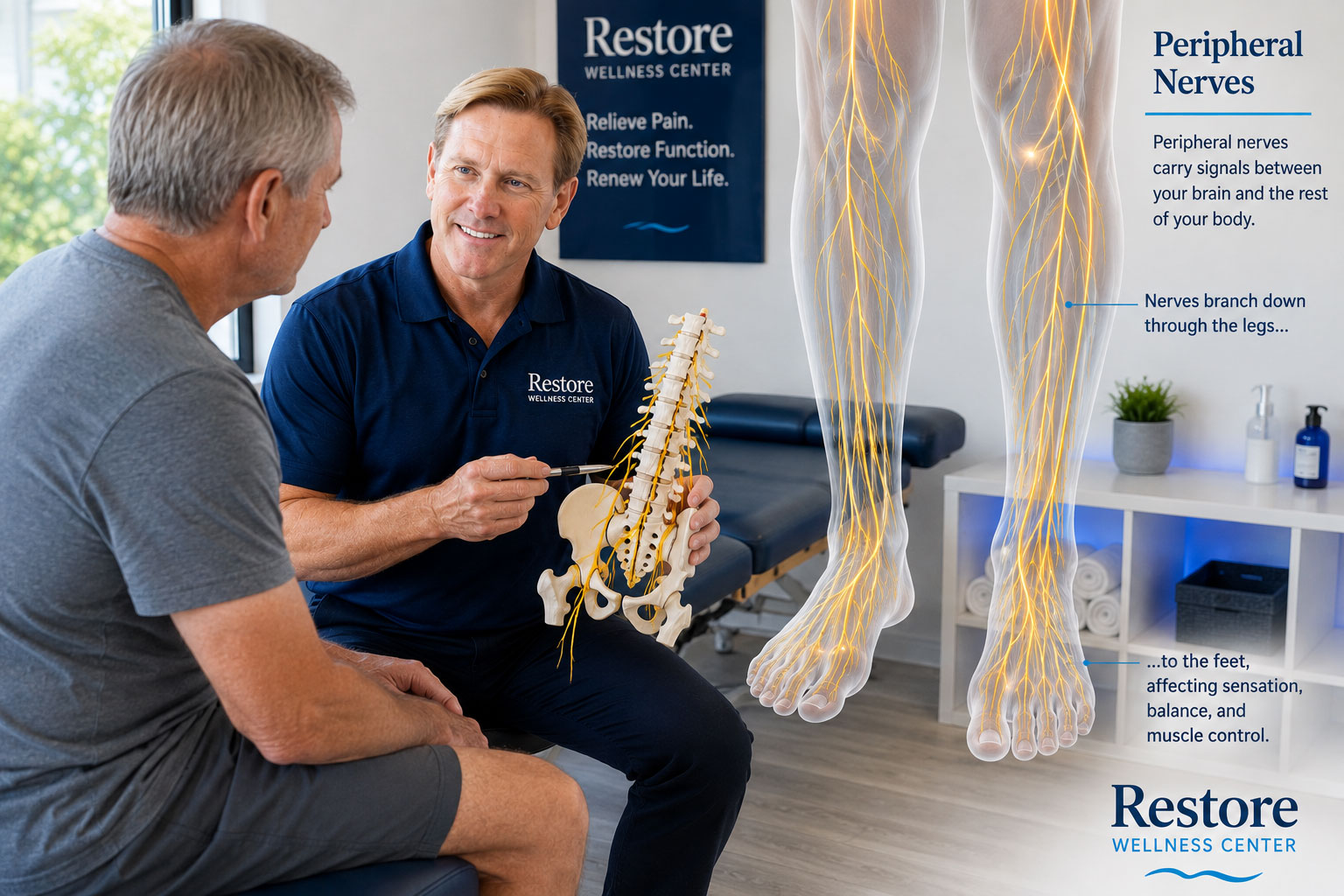
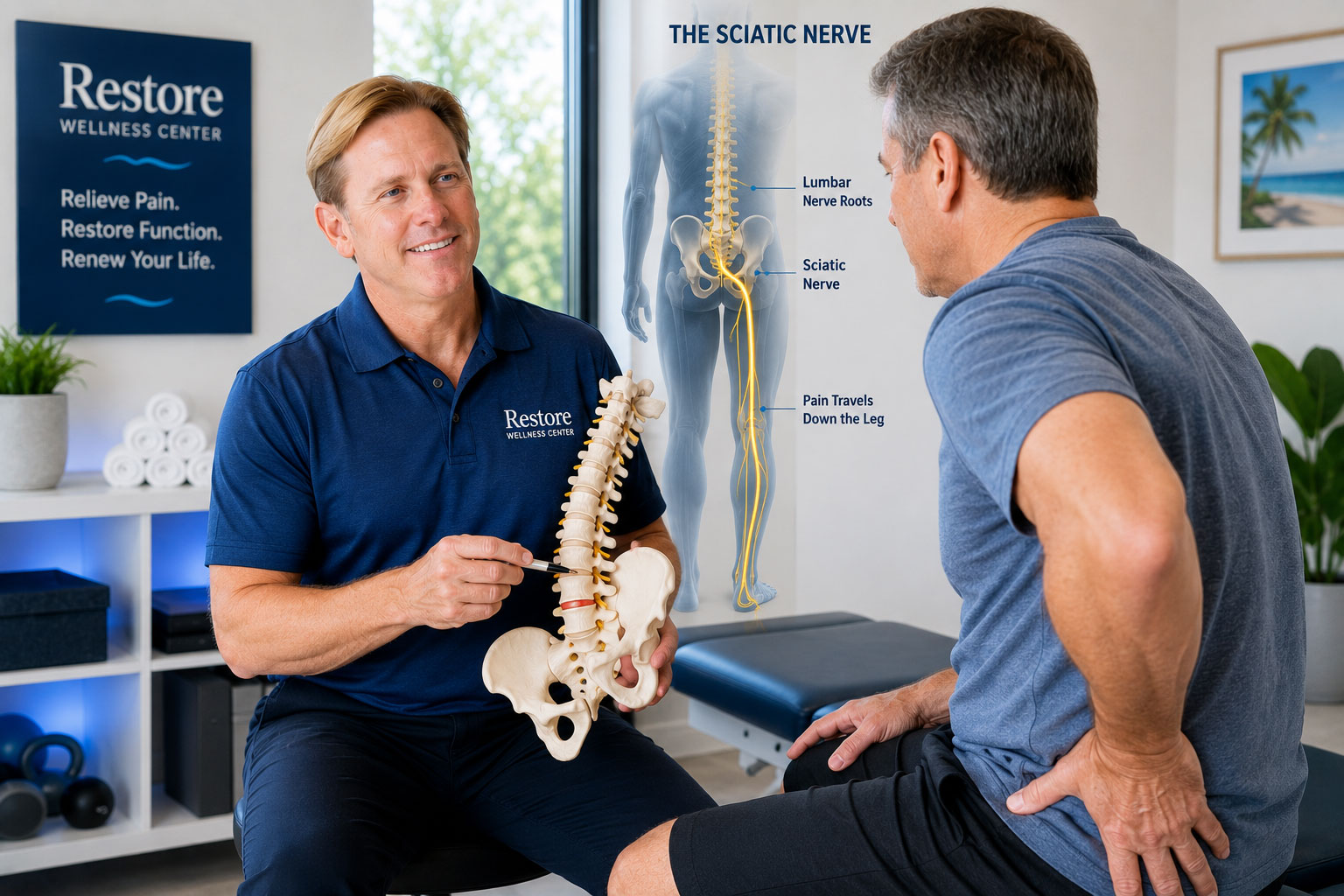
3. Sciatica and Pain Traveling Down the Leg
Sciatica is not simply another name for low back pain.
The term generally describes symptoms involving the sciatic nerve or nerve roots that contribute to it. People often describe pain that begins in the lower back or buttock and travels into the thigh, calf, or foot.
Other symptoms can include:
- Tingling
- Numbness
- Burning sensations
- Electric or shooting pain
- Weakness
A disc problem, narrowing around a nerve, or another source of nerve irritation may be involved.
This is a good example of why diagnosis matters. A person with pain running down the leg may say, “I have sciatica,” but identifying what is irritating the nerve is much more useful than simply naming the symptom.
Depending on the cause and examination findings, conservative care may include chiropractic treatment, exercises, movement changes, and other therapies.
4. Headaches Related to the Neck
Some headaches may be connected to problems involving the neck.
A cervicogenic headache, for example, originates from structures in the neck even though the pain is felt in the head.
Someone might experience:
- Pain beginning near the base of the skull
- Headaches associated with neck stiffness
- Pain triggered by certain neck movements
- Reduced neck mobility
Research into spinal manipulation for headaches varies by headache type, so it is important not to assume every headache should be treated chiropractically.
Headaches can have many causes, and sudden or unusual headaches sometimes require immediate medical attention.
5. Whiplash and Auto Accident Injuries
After a car crash, people often focus on visible injuries. Musculoskeletal injuries may be less obvious.
Whiplash occurs when the head and neck move rapidly during a collision. Muscles, ligaments, joints, and other tissues can be affected.
Symptoms can include:
- Neck pain
- Stiffness
- Headaches
- Upper back pain
- Shoulder discomfort
- Reduced range of motion
Symptoms are not always immediate. Adrenaline and the stress response surrounding an accident can make it difficult to recognize discomfort at first.
Someone who has been injured in an accident should be appropriately evaluated, especially if symptoms are developing or worsening.
6. Shoulder and Upper Back Pain
Shoulder pain is another area where determining the source is essential.
The shoulder is a complex joint. Pain may come from the shoulder itself, surrounding muscles and tendons, the upper back, or sometimes the neck.
For example, someone may feel pain around the shoulder blade after sitting at a computer all day. Another person may have pain when lifting an arm overhead because of a shoulder injury.
Those are not necessarily the same problem and should not automatically receive the same treatment.
When restricted movement or mechanical problems are involved, chiropractic and other conservative treatments may sometimes be part of the care plan.
7. Hip and Pelvic Pain
The hips, pelvis, and lower spine work together every time you walk.
Problems in one area can change how another area moves.
Hip discomfort may be associated with:
- Joint stiffness
- Muscle tightness
- Overuse
- Changes in walking mechanics
- Lower back problems
- Age-related joint changes
For active adults around Melbourne, Viera, Satellite Beach, Palm Bay, and the rest of the Space Coast, hip mobility can have a major effect on activities such as walking, golfing, running, exercising, and playing pickleball.
A chiropractor can evaluate movement and determine whether conservative care is appropriate or whether the symptoms suggest the need for additional evaluation.
8. Knee, Ankle, and Other Joint Problems
Chiropractic care is not limited to the spine.
Some chiropractors also evaluate extremity joints, including the shoulders, elbows, wrists, hips, knees, and ankles.
That does not mean an adjustment can repair every joint problem.
A torn ligament, fracture, severe arthritis, or other structural injury may require orthopedic or other medical treatment.
However, mobility restrictions, muscle imbalances, and movement problems can sometimes be addressed as part of a broader conservative treatment plan.
9. Posture and Desk-Related Pain
Posture itself is not a disease, and there is no single “perfect” posture that everyone needs to maintain all day.
The bigger problem is often spending too much time in one position.
Someone working eight hours at a computer may develop neck, upper back, shoulder, or low back discomfort even with a fairly good workstation.
Changing positions regularly, strengthening supporting muscles, improving workstation setup, and staying active can be just as important as hands-on care.
At Restore Wellness Center, our goal is not to make someone dependent on treatment. It is to identify the factors contributing to the problem and help the patient participate in improving them.
10. Sports and Overuse Injuries
You do not need to be a professional athlete to develop an overuse injury.
Here on the Space Coast, we see people who want to stay active through:
- Golf
- Pickleball
- Running
- Cycling
- Surfing
- Fishing and boating
- Gym workouts
- Yard work and home projects
Repetitive movement, sudden increases in activity, poor mechanics, limited mobility, and inadequate recovery can contribute to pain.
Chiropractic care may be one component of a plan that also involves exercise, mobility work, activity modification, and other treatments when appropriate.
What Chiropractic Care Can and Cannot Do
It is important to be clear about this.
Chiropractic care can be useful for certain musculoskeletal problems, but it is not a cure for every health condition.
| Problem | Possible Role for Chiropractic Care |
|---|---|
| Mechanical low back pain | May help improve pain and function for some patients |
| Neck pain | May be useful for selected patients depending on the cause |
| Sciatica | May be part of conservative management after identifying the cause |
| Cervicogenic headache | May be considered in selected cases |
| Joint stiffness | May help improve mobility when appropriate |
| Fracture or dislocation | Requires appropriate medical care, not routine manipulation |
| Serious infection or medical disease | Requires medical evaluation and treatment |
This distinction matters because good chiropractic care begins with knowing when chiropractic treatment is appropriate and when it is not.
What Happens During a Chiropractic Evaluation?
Your first visit should involve more than simply lying down and receiving an adjustment.
A proper evaluation may include:
- Health history. We need to understand when the problem started, what makes it better or worse, previous injuries, medications, medical conditions, and prior treatment.
- Discussion of symptoms. Where does it hurt? Does the pain travel? Is there numbness or weakness? Is the problem getting worse?
- Physical examination. Depending on the complaint, this may include movement, range of motion, orthopedic or neurologic testing, and other appropriate examination procedures.
- Determine whether additional testing is necessary. Imaging is not automatically needed for every patient, but there are situations where it may be appropriate.
- Create an individualized plan. Treatment should be based on what the evaluation finds rather than applying the same routine to everyone.
When Should You Not Start With a Chiropractor?
Some symptoms require urgent medical evaluation.
Seek prompt or emergency medical care for symptoms such as:
- Sudden severe weakness
- Loss of bladder or bowel control
- New numbness around the groin or saddle area
- Severe pain following significant trauma
- Chest pain or difficulty breathing
- Signs of stroke
- A sudden severe or unusual headache
- Fever combined with significant back or neck pain
- Progressively worsening neurologic symptoms
When there is doubt, patient safety comes before treatment.
Is Chiropractic Care Safe?
For appropriately selected patients, spinal manipulation generally has a good safety record. Temporary soreness, stiffness, discomfort, or headache can occur after treatment. Serious complications are rare, but no medical treatment is completely risk-free.
That is another reason your health history and examination matter. Age, osteoporosis, fractures, vascular concerns, previous surgeries, medications, and other health conditions may affect what type of treatment is appropriate.
Sometimes the right choice is a traditional adjustment. Sometimes a gentler technique is better. Sometimes another treatment is more appropriate. Sometimes referral to another health professional is the correct decision.
Why Restore Wellness Uses More Than One Approach
One of the advantages of receiving care at Restore Wellness Center is that chiropractic is not the only tool available.
Depending on the condition and the patient’s needs, a treatment plan may involve chiropractic care alongside services such as acupuncture, K-Laser therapy, shockwave therapy, knee decompression, red light therapy, or other appropriate wellness services.
More treatment is not automatically better. The goal is to select the treatment or combination of treatments that makes sense for the individual.
Choosing a Chiropractor in Melbourne, FL
If you are looking for a chiropractor in Melbourne or elsewhere in Brevard County, do not choose solely based on who promises the fastest result.
Look for a provider who:
- Listens to your concerns
- Takes an appropriate health history
- Explains what they believe is causing the problem
- Discusses treatment options clearly
- Is willing to modify care based on your health and comfort
- Recognizes when another provider should be involved
- Helps you understand what you can do outside the office
The goal should be informed care, not simply receiving an adjustment.
Frequently Asked Questions About Chiropractic Care
What conditions do chiropractors treat most often?
Low back pain, neck pain, joint stiffness, mechanical musculoskeletal pain, and some types of headache are among the problems commonly seen in chiropractic offices. Chiropractors may also evaluate patients with sciatica, auto accident injuries, sports injuries, and extremity joint complaints.
Do chiropractors only treat the spine?
No. Although spinal care is central to chiropractic practice, chiropractors may also evaluate problems involving joints and surrounding musculoskeletal structures throughout the body.
Can a chiropractor help sciatica?
Chiropractic care may be appropriate for some people with sciatica, depending on what is causing the nerve irritation. An examination is important because sciatica is a symptom pattern rather than one single condition.
Do I need an X-ray before seeing a chiropractor?
Not everyone needs imaging before chiropractic treatment. Whether X-rays, MRI, or other testing is appropriate depends on your history, symptoms, examination, previous injuries, and possible warning signs.
How many chiropractic visits will I need?
There is no responsible way to give every patient the same number. The answer depends on the condition, how long it has been present, its severity, your overall health, your goals, and how you respond to care.
Can older adults receive chiropractic care?
Many older adults can receive chiropractic care, but techniques may need to be modified based on bone health, arthritis, previous surgeries, medications, and other medical conditions. An individualized evaluation is especially important.
When should I see a medical doctor instead?
Symptoms suggesting fracture, infection, severe neurologic problems, stroke, heart or lung problems, or another serious medical condition require appropriate medical evaluation. A responsible chiropractor should recognize warning signs and refer when necessary.
Ready to Find Out What Is Causing Your Pain?
If pain or stiffness is keeping you from working, sleeping, exercising, playing golf, enjoying the beach, keeping up with your family, or simply moving comfortably, the first step is understanding what is causing the problem.
Restore Wellness Center serves patients in Melbourne and throughout Brevard County, including West Melbourne, Palm Bay, Viera, Suntree, Satellite Beach, Indian Harbour Beach, and surrounding Space Coast communities.
Our goal is straightforward. We want you to understand your condition, understand your options, and make an informed decision about your care.
Contact Restore Wellness Center to schedule a consultation and find out whether chiropractic care may be appropriate for you.
This article is for general educational purposes and is not a substitute for an individual medical evaluation, diagnosis, or treatment recommendation.



1 Comment