Why Does Sciatica Cause Pain Down Your Leg?
Sciatica causes pain down the leg because the irritated nerve usually begins in the lower spine but carries signals through the buttock and into the leg. When one of the lower spinal nerve roots is compressed or irritated, your brain may interpret the problem as pain, burning, tingling, numbness, or weakness anywhere along the area supplied by that nerve. That is why a problem in your lower back can sometimes hurt more in your calf or foot than it does in your back.
It is one of the most confusing things about sciatica.
A patient comes into our Melbourne office pointing to the back of the thigh or outside of the calf and says, “My back isn’t really what hurts. Why are we talking about my spine?”
That is a very reasonable question.
The answer comes down to how your nervous system is wired.
What Is Sciatica?
Sciatica is a term used to describe symptoms that travel along the pathway of nerves originating in the lower spine and contributing to the sciatic nerve.
People often call sciatica a diagnosis, but it is more useful to think of it as a pattern of symptoms.
Those symptoms may include:
- Sharp or shooting leg pain
- Burning pain
- An electric shock sensation
- A deep ache in the buttock or leg
- Tingling or pins and needles
- Numbness
- Weakness in the leg or foot
The symptoms commonly affect one side of the body, although the exact location depends on which nerve root is involved.
Some patients have significant low back pain along with the leg symptoms. Others have surprisingly little back pain.
That second group is often the most confused.
How Can Your Back Cause Pain in Your Leg?
To understand sciatica, picture the nerves leaving your spine like electrical cables leaving a central control panel.
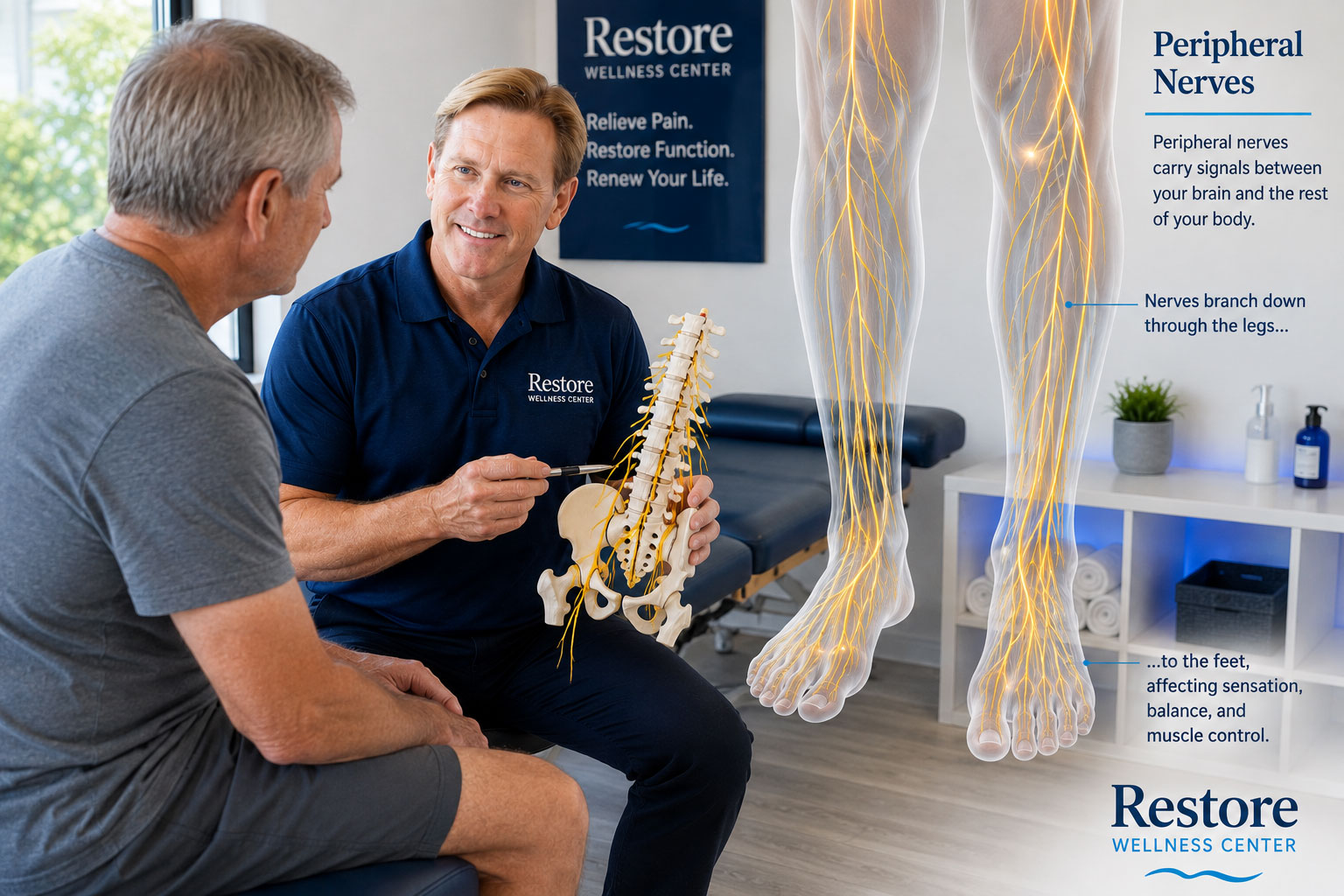
Your brain and spinal cord make up the central nervous system. Nerve roots branch away from the spinal cord and eventually form peripheral nerves that travel throughout the body.
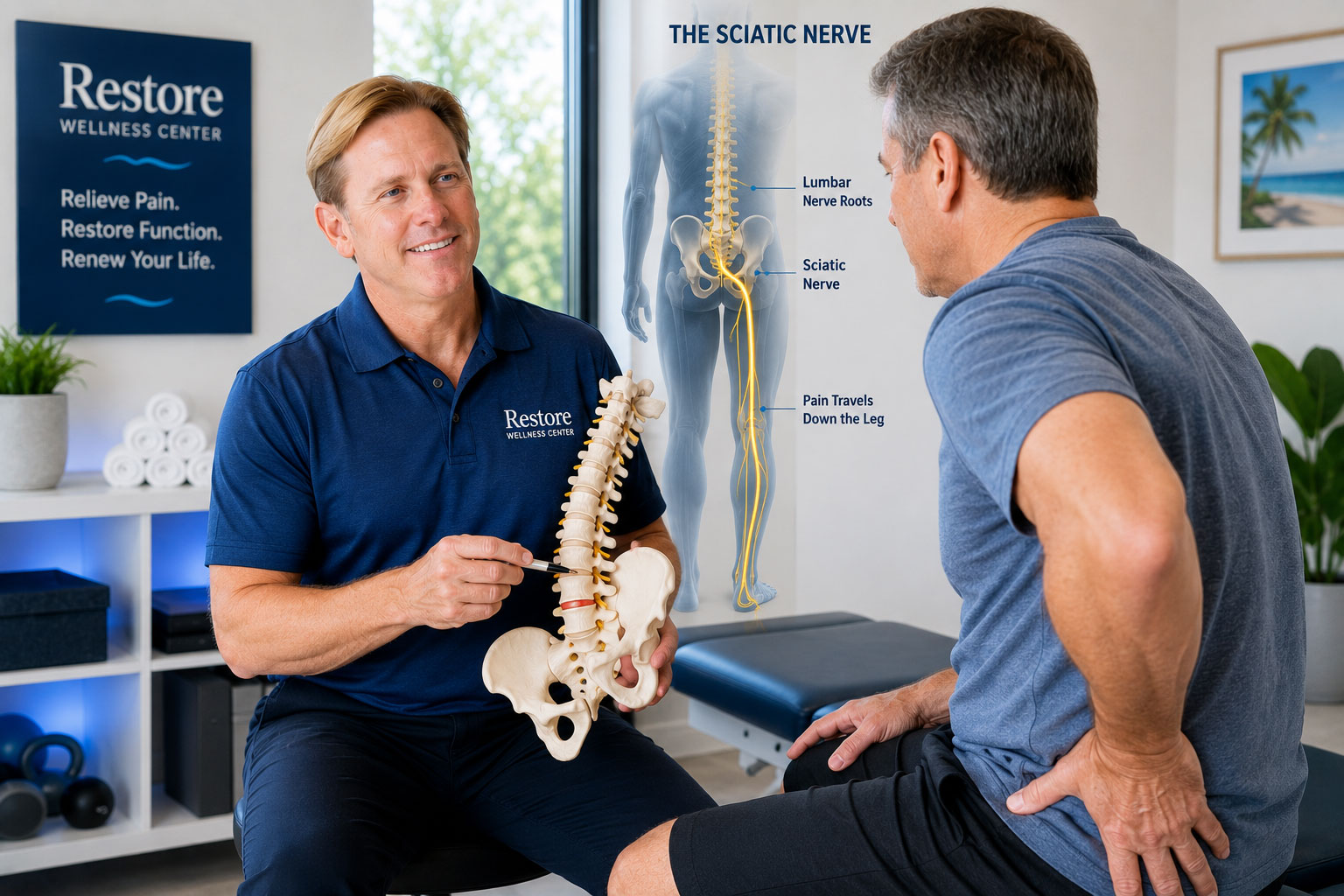
The sciatic nerve is formed from nerve roots in the lower lumbar and sacral region.
Those nerve fibers continue through the buttock and down the leg.
If a nerve root becomes irritated near the spine, symptoms can be felt farther down the pathway that nerve serves.
This is called radicular pain. When there are neurologic changes such as weakness, numbness, or altered reflexes associated with a spinal nerve root, clinicians may use the term lumbar radiculopathy.
Think about bumping your “funny bone” at the elbow. You hit your elbow, but the strange tingling sensation can shoot into your hand and fingers.
The injury did not occur in your fingers. The nerve was irritated farther up its pathway.
Sciatica follows a similar principle.
Why Does Sciatica Sometimes Hurt More in the Leg Than the Back?
This surprises many patients.
If the problem begins around a nerve root in the lower spine, shouldn’t the lower back hurt the most?
Not necessarily.
Nerves carry information between the body and the brain. When a lumbar nerve root becomes irritated, the brain can perceive pain in the region supplied by that nerve.
That may mean:
- Buttock pain
- Back-of-the-thigh pain
- Outer calf pain
- Pain along the shin
- Heel discomfort
- Pain or tingling in the foot
- Numbness in certain toes
A patient can therefore have relatively mild lower back discomfort but intense leg symptoms.
In the clinic, this pattern is an important clue that we may be dealing with nerve involvement rather than a simple muscle strain.
What Causes a Sciatic Nerve Root to Become Irritated?
Several problems can irritate or compress nerves in the lower spine.
Herniated Disc
A herniated disc is one of the best-known causes.
Spinal discs sit between the vertebrae and act partly as cushions. When disc material pushes outward, it can create inflammation around a nearby nerve root or physically place pressure on it.
That irritation can produce pain down the leg.
It is important to understand that not every herniated or bulging disc causes symptoms. Disc changes are commonly seen on imaging even in people who are not experiencing pain.
That is why we do not diagnose sciatica from an MRI picture alone. The imaging findings need to make sense alongside the patient’s symptoms and examination.
Spinal Stenosis
Spinal stenosis means there is narrowing in an area where nerves travel.
This becomes more common with age as discs, joints, and other spinal structures change.
Some people with lumbar spinal stenosis develop leg pain, heaviness, numbness, or weakness that becomes worse with standing or walking.
They may notice that sitting or leaning forward feels better.
That pattern is different from some disc-related cases, which is another reason we pay attention to what positions make symptoms better or worse.
Bone Spurs and Arthritis
Degenerative changes associated with osteoarthritis can create additional bone around spinal joints.
These bone spurs do not automatically cause pain. However, if they narrow the space around a nerve, they can contribute to nerve compression.
Other Causes
Less commonly, cysts, injuries, tumors, infections, or other conditions may affect a spinal nerve.
This is why persistent or unusual leg pain should not automatically be labeled “sciatica” without an evaluation.
Where Does Sciatica Pain Usually Travel?
There is no single sciatica pain map that fits everyone.
Different nerve roots supply different areas of sensation and muscle function.
| Symptom Area | What a Patient Might Notice |
|---|---|
| Buttock | Deep ache, burning, or sharp pain |
| Back of thigh | Shooting or pulling sensation |
| Outer leg or calf | Burning, tingling, or pain |
| Front or side of lower leg | Pain, tingling, or altered sensation |
| Foot | Numbness, tingling, burning, or pain |
| Toes | Numbness or altered sensation in particular areas |
The exact pattern can help a provider determine which nerve may be involved, but real patients do not always follow textbook diagrams perfectly.
That is why the examination matters.
Is Sciatica the Same as a Pinched Nerve?
People often use the terms interchangeably.
They are related, but “pinched nerve” is a broad description.
A nerve can be compressed in many locations throughout the body. Carpal tunnel syndrome, for example, involves compression of the median nerve at the wrist.
Sciatica usually refers to symptoms involving nerve roots in the lower spine or the sciatic nerve pathway.
Compression can contribute to sciatica, but inflammation around a nerve root can also be important. In other words, the nerve does not necessarily have to be dramatically squeezed for symptoms to occur.
Sciatica vs. Peripheral Neuropathy
This distinction is particularly important at Restore Wellness Center because we see patients for both sciatica and neuropathy.
The two can feel similar.
Both may cause:
- Burning
- Tingling
- Numbness
- Sharp pain
- Weakness
But they are not the same problem.
| Sciatica | Peripheral Neuropathy |
|---|---|
| Often begins with irritation of a spinal nerve root | Involves damage or dysfunction of peripheral nerves |
| Frequently affects one leg | Often affects both feet or legs |
| May follow a recognizable nerve pathway | May create a stocking-like pattern in the feet |
| Can be associated with a disc problem or spinal stenosis | Can be associated with diabetes and many other conditions |
| May change significantly with spinal position | May be less directly related to back position |
There are exceptions to all of these patterns, so this table should not be used to diagnose yourself.
It does show why simply saying “my foot is numb” does not tell us enough.
Why Sitting Can Make Sciatica Worse
Some people with sciatica feel fairly comfortable while walking but become miserable after sitting.
Others experience the opposite.
With certain disc-related problems, sitting and bending forward can increase stress on structures in the lower spine and aggravate nerve symptoms.
Long drives can therefore be difficult.
That is something we hear frequently here in Brevard County. A patient may feel manageable discomfort around the house but experience significant leg pain after driving from Palm Bay to Melbourne, commuting along I-95, or sitting through a long trip across Florida.
Other patients, particularly some people with spinal stenosis, may actually feel better sitting than standing.
Those differences give us useful information about what may be causing the symptoms.
Why Coughing or Sneezing Can Send Pain Down the Leg
This is another symptom patients sometimes think sounds strange.
“Why does my leg hurt when I sneeze?”
Coughing, sneezing, or straining can temporarily change pressure around the spine and nerve roots. If a nerve is already irritated, that brief pressure change may reproduce or intensify radiating pain.
It does not prove that someone has a herniated disc, but it is useful information during an evaluation.
Does Every Pain Down the Leg Mean Sciatica?
No.
This is an important point.
Leg pain can come from muscles, joints, tendons, blood vessels, peripheral nerves, the hip, the knee, and other structures.
For example, pain from a hip problem can sometimes travel into the thigh. A hamstring injury can hurt along the back of the leg. Peripheral artery disease can cause leg discomfort during walking. A blood clot can cause calf pain and swelling.
Those problems require very different treatment.
A good examination is about figuring out what the symptoms actually represent, not simply attaching the word “sciatica” to every pain below the waist.
How We Evaluate Sciatica
When someone comes to Restore Wellness Center with pain traveling down the leg, the conversation often tells us as much as the location of the pain.
We want to know:
- Where did the pain begin?
- How far down the leg does it travel?
- Is there numbness or tingling?
- Does the leg feel weak?
- Is sitting worse than standing?
- Does walking help or aggravate it?
- Does coughing or sneezing increase the pain?
- Was there an injury?
- Have the symptoms been improving or worsening?
- Have you had similar episodes before?
The physical examination may then include testing strength, sensation, reflexes, movement, and positions that reproduce or relieve symptoms.
Imaging such as an MRI is not automatically necessary for every case. It may become important when symptoms are severe, persistent, progressing, associated with significant neurologic findings, or when the examination suggests another concern.
Can Chiropractic Care Help Sciatica?
Some people with sciatica may be candidates for conservative chiropractic care, but treatment should depend on the cause of the symptoms and the examination findings.
There is no single “sciatica adjustment.”
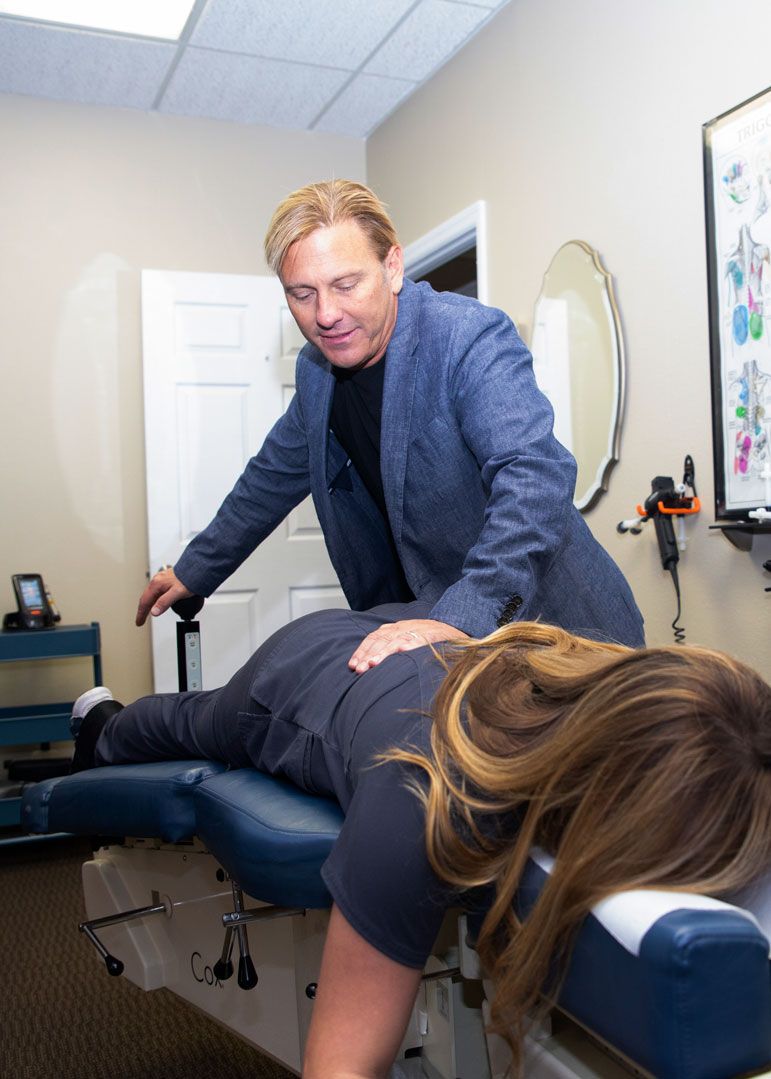
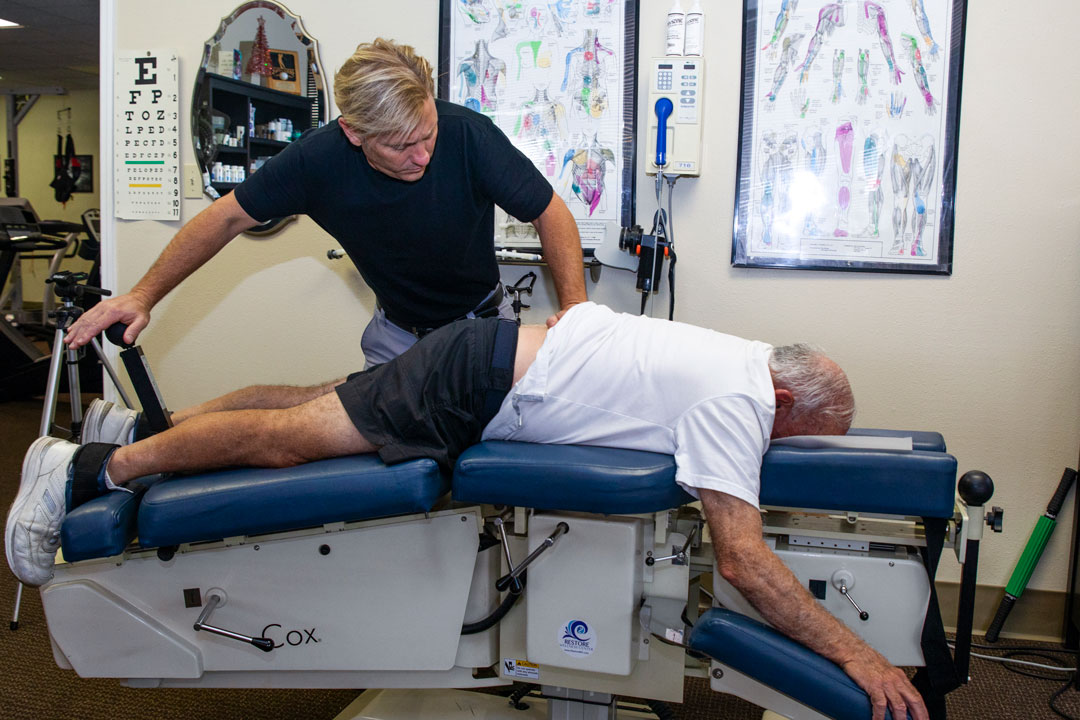
For one patient, the treatment plan might involve carefully selected spinal manipulation or mobilization. Another patient may need a gentler approach. Exercise, movement recommendations, activity modification, and other conservative therapies may also be appropriate.
And sometimes chiropractic treatment is not the right first step.
If the examination shows significant or worsening neurologic problems, suspected fracture, infection, or another serious condition, referral for appropriate medical evaluation takes priority.
Should You Rest When You Have Sciatica?
When your leg feels like it is on fire, staying in bed may sound appealing.
Extended bed rest is usually not the goal.
Movement often needs to be modified during an acute episode, but remaining reasonably active within your tolerance is generally preferred over prolonged inactivity.
That does not mean pushing through severe pain.
Someone who normally walks three miles around Wickham Park does not need to prove anything by finishing the full walk while experiencing intense nerve pain.
Activity should be adjusted to what you can tolerate safely while the underlying problem is evaluated and treated.
When Sciatica Needs Urgent Medical Attention
Most sciatica is not a medical emergency.
There are important exceptions.
Seek urgent medical evaluation if leg or back symptoms are accompanied by:
- New loss of bladder or bowel control
- Numbness around the groin, buttocks, or saddle area
- Severe or rapidly worsening leg weakness
- Difficulty walking that is suddenly getting worse
- Significant trauma
- Fever with severe back pain
- Other rapidly progressing neurologic symptoms
Loss of bladder or bowel control and saddle-area numbness can be signs of cauda equina syndrome, a rare but serious condition requiring immediate medical care.
What About Calf Pain and Swelling?
Do not automatically assume calf pain is sciatica.
Calf pain accompanied by swelling, warmth, redness, or tenderness can be associated with a blood clot known as deep vein thrombosis.
This is especially concerning after prolonged immobility, surgery, or a long trip.
That type of symptom needs prompt medical evaluation.
This distinction illustrates why diagnosing the source of leg pain matters so much.
Can Sciatica Go Away Without Surgery?
Many cases improve with time and conservative treatment, and surgery is not required for every person with sciatica.
The outlook depends on what is causing the nerve irritation, how severe the symptoms are, whether weakness is present, and how the condition progresses.
Surgery may become appropriate in selected cases, particularly when there is significant nerve compression with progressive neurologic loss or when severe symptoms fail to respond to appropriate conservative treatment.
The goal should not be avoiding surgery at any cost.
The goal is choosing the least invasive treatment that is reasonable and safe for the condition while recognizing when more advanced care is necessary.
A Practical Example: The Pain Is in the Foot, but the Problem May Be Higher
Imagine a patient from West Melbourne who wakes up with mild lower back stiffness.
A few days later, the back feels somewhat better, but a burning sensation develops along the outside of the calf and into the foot.
The patient starts rubbing the calf because that is where the pain is strongest.
But massage to the calf does not change much.
During an examination, certain movements of the lower spine reproduce the leg symptoms, and neurologic testing suggests irritation involving a lumbar nerve root.
In that situation, treating only the painful spot in the calf would miss the likely source of the problem.
This is one of the most important concepts to understand about nerve pain:
Where you feel the symptom is not always where the problem begins.
Frequently Asked Questions About Sciatica and Leg Pain
Why does sciatica go all the way down to my foot?
Nerve roots from the lower spine contribute to nerves that travel through the leg and into the foot. When one of those roots is irritated, pain, numbness, burning, or tingling may be felt anywhere along the area supplied by that nerve.
Can you have sciatica without back pain?
Yes. Some people experience much more pain in the buttock, leg, calf, or foot than in the lower back. The source of the nerve irritation can still be in the lumbar spine even when back pain is minor.
Why does sciatica usually affect only one leg?
Sciatica often occurs when a nerve root on one side of the lower spine becomes irritated or compressed. That can create symptoms primarily on the corresponding side. Bilateral symptoms can occur and deserve careful evaluation.
Does numbness mean my sciatica is getting worse?
Numbness indicates sensory nerve involvement and should be evaluated. It does not automatically mean permanent nerve damage, but new or worsening numbness, weakness, or other neurologic symptoms should not be ignored.
Is sciatica the same as neuropathy?
No. Sciatica commonly involves irritation of nerve roots associated with the lower spine. Peripheral neuropathy involves dysfunction or damage of peripheral nerves and can have causes such as diabetes, autoimmune disease, infections, certain medications, and other medical conditions.
Can a herniated disc cause sciatica?
Yes. A lumbar disc herniation can irritate or compress a nearby nerve root and produce radiating leg pain. However, many disc bulges and herniations seen on imaging do not cause symptoms, so imaging needs to be interpreted alongside the clinical examination.
When should I see someone for sciatica?
Consider an evaluation when pain is severe, keeps returning, lasts more than a short period, travels below the knee, interferes with normal activities, or is accompanied by numbness, tingling, or weakness. New bladder or bowel problems, saddle numbness, or rapidly progressing weakness require urgent medical care.
Sciatica Care in Melbourne, Florida
If you have pain running from your lower back or buttock into your thigh, calf, or foot, treating only the place that hurts may not solve the problem.
The first step is figuring out where the symptoms are coming from.
At Restore Wellness Center in Melbourne, we evaluate the pattern of pain, movement, sensation, strength, and other findings to help determine whether the symptoms are consistent with sciatica and whether conservative treatment may be appropriate.
We serve patients throughout Melbourne, Eau Gallie, West Melbourne, Palm Bay, Viera, Suntree, Satellite Beach, Indian Harbour Beach, and surrounding Brevard County communities.
If radiating leg pain is making it difficult to sit, drive, sleep, work, exercise, or enjoy your normal activities, it may be time to have it evaluated.
Contact Restore Wellness Center to schedule an evaluation and learn more about your options for sciatica and radiating leg pain.
This article is for general educational purposes and does not replace an individualized medical evaluation, diagnosis, or treatment recommendation.